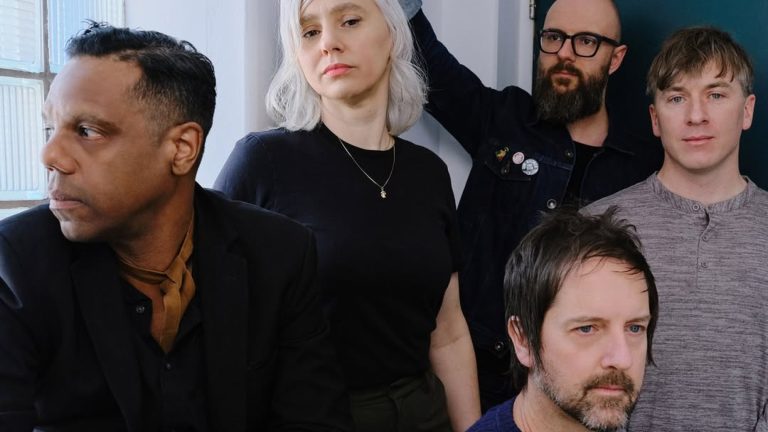


In a genre that’s often all about noise, modern rock music tends to be loud for loudness’ sake. New York-based rock band daysies leans hard into this expectation in their moody debut EP, gladly characterizing themselves as “loud ass rock music.” However, this loudness is not purposeless. In an effort to let chaos in their lives work for them, each clamorous track is a personal journey where, ultimately, the solution is surrender.
Due to misaligned schedules, all of my communication with the band was over text and email, just missing each other or messaging at opposite ends of the day. This form of interview fits the essence of the wistful EP more, though, as if I were sifting through old documents from a past era of my life, piecing together forgotten memories like how the lyrics on i left the candle burning feel like they’re being discovered as they’re sung. While the information sometimes took a while to fully receive, I pretty quickly got the full picture of how daysies was formed. A group bonded through the Brooklyn indie scene, the three musicians all desiring to contribute to many of the local shows they frequented. Ari Burch, their guitarist, who fronted the effort, initially formed a group called gladed III. However, as she put it, “Eventually we wanted to record, and the project was changing, expectations were growing, and this was when David joined the band as our new bassist.” It made sense to rebrand. Now, the band that is daysies exists as Burch, Leo Menninger on drums, and the aforementioned David Moberg on bass.
i left the candle burning itself came from a desire to preserve their sound digitally, more than any one core theme binding these specific tracks together. After daysies took so long to come together, the group wanted to preserve what they currently had, already familiar with how fast it could change. All of these songs were written months apart, a very train-of-thought way to process heavy emotion with heavier music. The opening track, “untitled,” starts deceivingly slow, building for over a minute with layers of cymbals crashing, frantic drums and guitar, and speaker feedback. Eventually, it kicks up to something more upbeat instrumentally, but the guitar strumming can’t fully hide the melancholic, surprisingly simple lyrics. Composed of lines like “I love my friends, it’s not the end,” the song isn’t saying anything particularly new. But this shy confession of noticing something as tame as “your soft eyes [looking] my way” behind an intense sound displays the almost emotionally stunted place this EP begins at. These don’t feel like the observations of the adult singer, but something from a kid with a grade school crush. When the songs suggest this album was written after a relationship turned sour, it can be hard to sympathize when it seems like the singer is viewing things immaturely.
The next song, “geese,” professes a similar outlook, with all the energy of a hyperactive child. The song’s title comes from the guitar’s tone throughout, squeaking as if someone just ran into a crowd of the titular animal, causing them to scatter. After letting the motif play out, Burch’s soft voice fades in, proclaiming an equally innocent sentiment: “All the wondrous things, don’t know what they mean.” While the first song comes from a childlike perspective, this one shows the beauty on the other side. The singer has an inherent wonder about the world around them that, while young at times, is endearing. After hearing this song, you start to build a different view of the first one, too, realizing this youthfulness doesn’t always mean naivety. Each song begins making a lot more sense when absorbing the one before it, making the experience of relistening all the more imperative.
“wishes” is the most emotionally explicit song from i left the candle burning, with some of the most straightforward lyrics. They’re mixed more distinctly, too, easier to hear with the meditative backing tracks. Burch admits that writing is often a very cut-and-dry process for her, with the guitar and vocal parts taking shape together. She says that for future projects, though, she’s “approaching vocals more as a part of the instrumental and finding ways to fit more melody into songs.” “wishes” feels like the start of that, vulnerable with an optimistic twist. The singer’s voice isn’t there just to express the song’s emotions, but to sometimes become the instrumentals’ backing track, switching places seamlessly. While they present the classic tale of worrying about a past failed relationship, wondering what the singer could have messed up, all hope is not lost. Each chorus ends with the proclamation, “I only realize you will be fine,” the song itself insisting, “I know you.” While sentimentally looking back on things they’ve missed about this relationship, they don’t then resolve to wallow in it. Instead, they take pleasure knowing they will both ultimately come out the other end okay.
The process of reaching that state is immediately displayed in “passing ships,” which is perfectly ordered on the EP to have the impact that it does. If it had been anywhere else, without the buildup of the other three songs, it could be considered just as emotionally inexperienced as “untitled.” The project would end on a much darker note, allowing the singer to fall back into old patterns. Rather, it displays Burch’s method of letting memories take over. She said, “There’s a growing theme in my songwriting of surrender to the chaos of life.” “passing ships” starts in a quiet, reflective place, but quickly the lyrics dissolve into riffs, willingly letting the memories overwhelm. The singer isn’t one of the two ships passing each other—they let these ships wash over them. They aren’t regretful, but grateful, because they “know you talk like you used to.” These memories are the candle left burning, but it’s not kept on for anyone’s sake but their own. The candle is burning so the feelings within it can be released.
“passing ships” ends in the only way appropriate for the track, with the winding instrumentals building to a repetitive cacophony, sweeping listeners up. i left the candle burning is all about context, where an instrumental buildup is just as important as an emotional one. Getting lost in the sound isn’t an unintended side effect of just how loud “passing ships” gets, but instead the point. In Burch’s words, “Loud music just became my outlet for processing those feelings.” Time and time again, while communicating with Burch, she would tell me, “Our live shows are a big part of the daysies experience… We mixed our recordings with the intention of capturing the live sound as best as we could, but there’s nothing like loud amps in a room. There’s something really special about sharing that sort of transcendent experience with audience members.” I couldn’t agree more with a track like this, something meant to be heard in your chest.