
Translating to sea monk, UMIBŌZU is a mollusc-like, early 17th-century mythological sea creature that became popular in Japanese folklore among sailors and fishermen. It is a massive, dark humanoid-eque, made up of the spirits of fishermen and priests lost to the sea. The story served as a fictional cautionary tale to express the importance of engaging with nature with diligence and prudence, which feels fitting for Blackchai’s latest EP. The Brooklyn emcee adopted the UMIBŌZU as the title of a project accentuating this idea through Buddhist proverbs, displaying his own humility in rap.
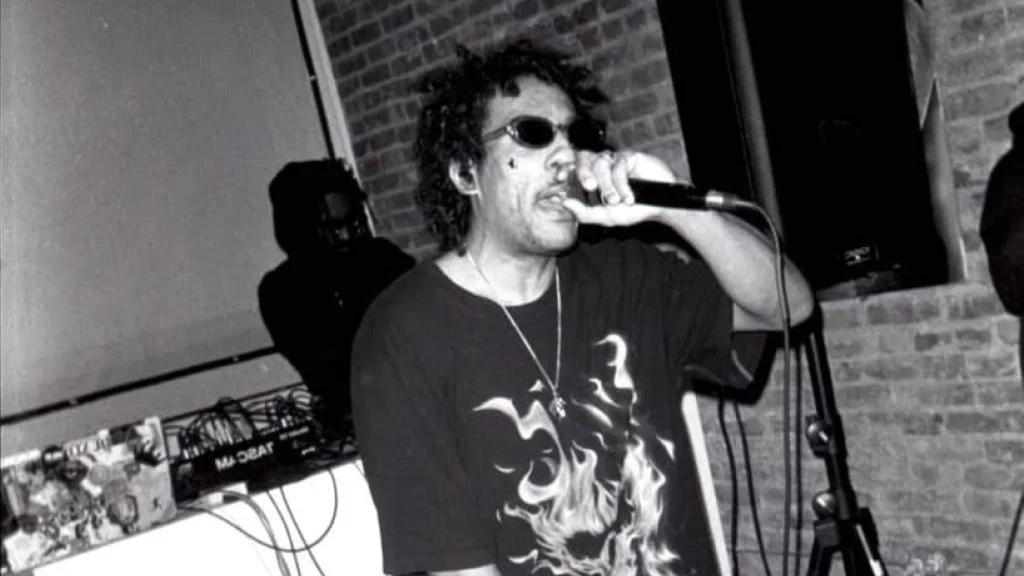
Blackchai embodies the spirit of the great New York rappers before him, picking up pieces of their work and forming something equal parts nostalgic and ahead of its time. Obtaining the self-assured conviction of a Ghostface, the vividly illustrative storytelling chops of a Nas, and even the unwavering swagger of a Prodigy, only a New Yorker could capture, Blackchai makes himself at home on any type of production pitched his way. On this particular project, he manages to display dimensions in his style according to the producer he partnered with and the type of production they provided. The main one of the three, producing four of the six songs, is the highly decorated Baltimore beatmaker Messiah Muzik, bringing eerie earworms of samples fully furnished with heavy, authentic-sounding percussion. His ominous style, combined with Blackchai’s steady flow and penmanship, makes for a potent dynamic duo. Their chemistry is best displayed on “Skinny 6 Pack,” where Blackchai reaches an unconscious flow state of fleeting ideas and unflinching vehemence for just under two minutes over a triumphant yet ghoulish piano and woodwind jazz track. The delivery here is syllabically meticulous, rapping with a tactile sense of urgency, almost as a warning to sailors of the dangers of arrogance when approaching the sea. “Only as wise as the last thing I wrote / Scarcity is artificial, hard to make people care about anything outside of instant gratification.”
“UMIBŌZU (Immovable!)” then sees Brooklyn rapper-producer shemar provide their signature spacious, pitch-bending loops in the form of a droning guitar pluck and drowned-out keys under a slower, casual Blackchai delivery with a more subtle tone to match the production’s pace. With this title track, he comes with his longest verse of all six songs and an accompanying motif to end; “Gotta find a safe way to share whatever’s buried deep / Exorcising broken dreams, lost reality, can’t take back what never happened / Tryna keep it level, stay immovable upon the feet.” The message repeats and reads like a mantra, whether to himself or the listener, to stay steadfast in the face of the metaphorical UMIBŌZU and its tidal waves without letting it drown the ship, much like the foreboding artwork portrays.
The last rapper-producer pairing is between Blackchai and New York multihyphenated creative Big Flowers, aka bloomcycle, with the outro “Clocking Out.” On this track, Blackchai effortlessly weaves words together over the formless, ever-evolving 80s-style electric guitar loop, pondering how to make the most of life with the time we have and to make sense of his goals within that time. He runs the beat like a treadmill, not quite the speed of the matted conveyor belt, but intensely in control of his pace as he navigates it.“No man’s immortal, the seconds wasted / The message hang longer than any vessel might last in an open space / The world keep on spinning.” The looming threat of mortality could once again represent the UMIBŌZU lurking beneath the figurative ship that seems otherwise steadily afloat. This dreamy-sounding track’s start and end have a spiritual kinship, centralizing the idea of facing emotional internal conflict head-on, a battle he references on the earlier title track frequently. He opens his verse with “They tryna tell me that it’s safer to keep it out the way / I’m not convinced, smoke inhalation made it all wash away.” The track and EP ends with Vietnamese Buddhist monk Thich Nhat Hanh advising to approach personal grief and sorrow by “look[ing] deeply into the nature of your suffering. If you’ve now got this mind for breathing, mind for walking, generating the energy of mindfulness… That energy of mindfulness [is] generated by what helps you to be strong enough to recognize and counter the pain, and embrace it.” Much like Hanh’s speech, the raps on “Clocking Out” and the entire EP reflect Blackchai’s own navigation of personally turbulent and enlightening moments.
This short yet dense EP serves as a filling appetizer, leaving just enough room for anticipation of Blackchai’s next full-length project. In the meantime, UMIBŌZU tinkers with the impermanence of both life and struggle, using spiritual references in his speech to crystallize the idea of being mentally and emotionally self-sufficient without entirely rejecting one’s support system. He offers thoughtfully-crafted verses with remarkable production to create an atmosphere reflective of being at sea; menacing and tumultuous with occasional yet evanescent moments of serenity. The UMIBŌZU creature, in this context, may be a figure in his own mind, representing the spirit of past selves converging to impose or inform values inherent to one’s self.