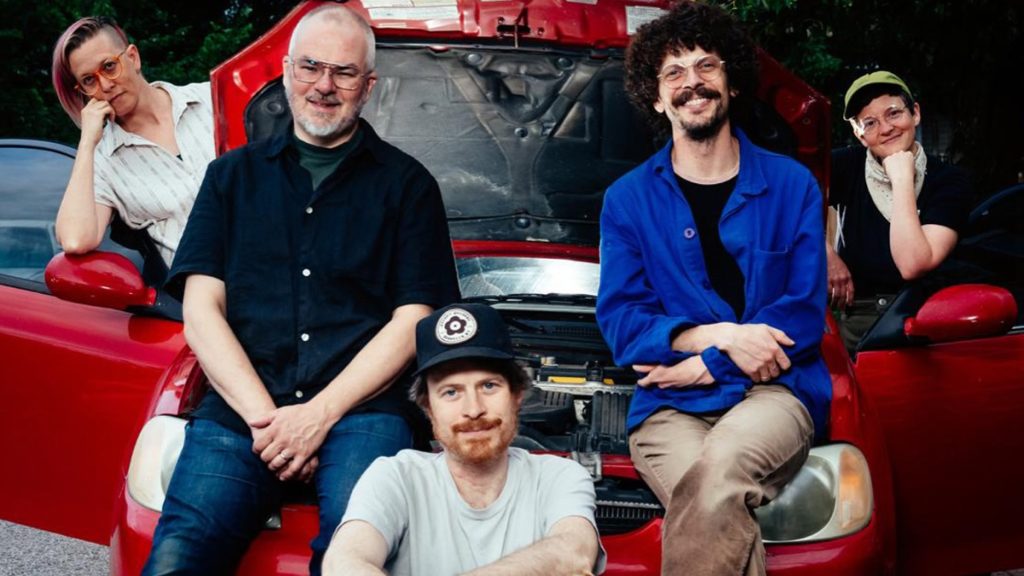

As much shit as supergroups often get, they certainly produce magic when each member knows their strengths. For example, ØSKE comes from different backgrounds to create some of the most vibrant jazz rap today. James Brandon Lewis and punk rockers The Messthetics balance each other out—the Messthetics’ arrangement leaves room for Lewis’s saxophone wails. Hopping aboard this jazz-fusion bandwagon is Crying Laughing, whose members are from different subgenres, from indie rock to ambient. Saxophonist Christian Best and drummer Jen Kirby, the two founding members, were once members of percussive art pop group Smoke Bellow; bassist Marc Miller was in the post-punk band OXES; keyboardist Steve Strohmeier did live work with bands and artists like Beach House and Dan Deacon. Saxophonist Rose Hammer Burt’s pedigree, however, lies closer to jazz and ambient music than the rest. You might think this would make for a messy coagulation of genres on paper, but actually it is far from that in practice. Together, all five members make music tackling jazzy arrangements, ranging from something fluid to something patchwork-like. You could even say Talking, the band’s first project, is truly an introductory record.
The two singles released from the Baltimore band sound like what would happen if math-prog auteurs Battles received writing credits on a new Sons of Kemet/Tortoise project.“Toppled Column,” the album’s opener, begins with an intricate dance between two saxophone riffs—played by alto sax players Best and Burt—under spare drums by Kirby, but soon bursts with the sound of raw electric bass and cymbals. In under three minutes, the track went from weaving saxophone riffs into a percussive nod to Egyptian-flavored jazz at around 1:05. In lesser hands, such a transition would sound messy, but they manage to pull it off with a tightness in three minutes. Meanwhile, “Ricemeat,” the project’s shortest track, opens with frantic maracas, dirty rhythmic bass, call-and-response sax play, and thunderous drums. It’s the track that leans the most towards the rock end of their music, and one that makes room for a kalimba-like additive. These two singles show that Talking is a gateway album into the jazz genre—only a gateway, as the band tackles jazz elements but often defies categorization. So don’t assume you have a steady idea of what kind of jazz is on the project. Crying Laughing takes creative liberties to bust out of the most basic ideas of what jazz is.
“Bass Alarm,” named after the alarm-like bass blaring through the track, continues experimenting with the format. Over the steady buzz is a 6/4 time signature where the drums march and sax blares like a revealing light alongside bright keyboards. The arrangement feels like you were stuck in a pleasant dream while an alarm goes off in the background to wake you up. Later, the juxtaposition between synth pad keyboards, waltzing bells, and rhythmic maracas turns “When They Come to Town You Just Exile” into a near feather-soft spiritual jazz affair from jump street. The closest you will likely get to a track whose music goes beyond the groove is the hallucinatory “Inner Life.” Starting with luminous keys, “Inner Life” kicks off the song, unfolding with a near tribal rhythm over light sax and a strong bass foundation. It is the one track that abandons past genre expectations by leaning more into desert psychedelia. Overall, each song unfolds in its own way, building the composition like creating a monument with blocks.
Every supergroup has one album demonstrating their musical chemistry before they hit you with a follow-up to solidify the band’s sound or purpose. Though the musicianship between each member of Crying Laughing is undeniable, Talking feels like it was made by a band still working on where they want to go after the jam session is over—hinted at by some tracks’ abrupt endings. Still, so much is covered, from ambient jazz to patchwork jazz punk, that though this may be their first album together, damn if it doesn’t make you curious about what they come up with next.