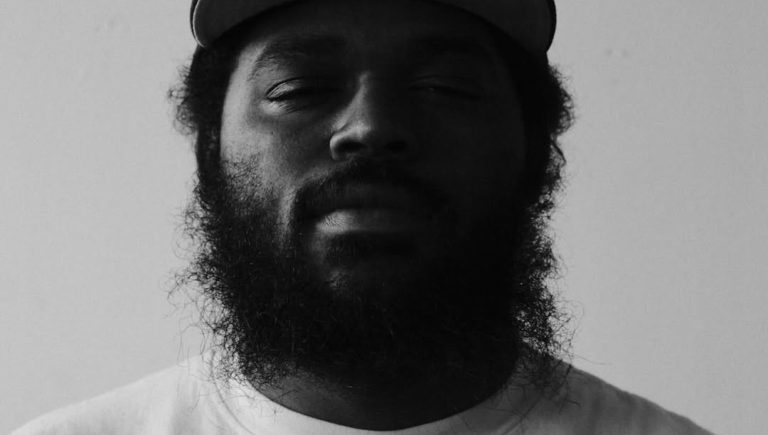


Anata is an Andean cultural celebration of Winter’s end, born in the Andes Mountains. It’s a ritual where humans realign themselves with nature and the divine. Food is prepared with the first crops of the season, and dances are performed in costumes of local animals and spirits. The festival occurs in three parts: a more intimate, family get-together, a party for the entire community, and then a final farewell to the holiday. Joshua Chuquimia Crampton’s newest album, Anata, is an auditory adaptation of this festival, introducing it to a white, modern audience through ambient sound.
California-based Crampton has released a handful of albums with covers as noisy as his music, designed with bright colors and clip art. Anata is no different, with a sunset-colored, Y2K collage of flowers, music notes, and animated faces. The color palette and flower imagery contain the same warm tones in the celebration’s costumes and decorations, while still keeping an online, alternative edge. His music stems from a deep history of spiritual creative practices, his projects somehow connecting to religion. In 2023, for example, he and his longtime collaborator and sibling Chuquimamani-Condori opened an art exhibition at MoMA PS1, featuring a large altar breaking down the colonization of cultural religions from Latin America. In limited social media clips, the sound produced by the exhibition was meant to wrap listeners in a warm blanket, as they sat on plush bean bags listening to tragic stories from the siblings’ family about persecution by the Bolivian state, but through that, being able to imagine queer and abolitionist futures for their province. These tendencies towards the supernatural have often been intertwined with the trappings of noise music, with whistles and cartoon-y vocals. For Crampton himself, this seems to be a way to combine his personal music tastes with his cultural music while also playing into noise music’s more otherworldly themes. With so much of the genre trying to capture something the human voice cannot do on its own, it makes sense that an album representing a festival would play into this style.
Anata samples traditional Andean music to make the music as authentic to the tradition behind it as possible. This type of music features a lot of constant bass, whether through drums or chanting, but with a liveliness meant for community-wide events. Crampton specifically used three traditional instruments to achieve this: the Charango, a lute-adjacent instrument, the Ronroco, a bass version of the Charango, and the Bombo Italaque, a cultural drum. They add a layer of authentic depth to the music that couldn’t be achieved without, serving as a grounding for the often angelic synth throughout. These instruments are the core of the album, serving as guiding points for those wholly unfamiliar with Andean culture. Both the charango and ronroco are utilized in “Mallku Diablón,” the strings swirling in a way that wouldn’t be out of place in one of Anata’s dances, save for Crampton’s mesmerizing electric overlaying.
Through Crampton’s album, each part of the festival is fully represented, adapting each element into a more contemporary sound. “Chakana Head-Bang!” opens the album, with a muffled, building intro from the Bombo Italaque, as if someone were literally banging their head against the wall. Chakana is an Incan word for the bridge between realms, connecting the Earth to the spiritual realms. This is a perfect title for the opening track, as “Chakana Head-Bang!” feels like witnessing the heavens splitting open. With a particularly loud bang, the noise finally breaks through to a repetitive synth on top of a slight dance beat. The celebration has commenced, opening up a path between humans, nature, and their gods.
The album’s first three tracks blend into a consistent wall of noise, becoming a chorus of worship with reverbing guitar and a steady beat. This first part is the time for a more personal connection with the world around you, often dedicated directly to the home and animals living on the land. “Taquini (Juntxs)” emulates this with a more focused sound—a less developed soundscape than other tracks to capture the feeling of connecting with one’s spirituality and land individually. Its instrumentals are predominantly guitar and drums, reckoning as simply as this album can with the listener’s own spirituality. With a more toned-down feel, the call to something larger than the music started to seep into at least my own brain, allowing me to ponder what I would want to give thanks for so unapologetically. These tracks often accentuate the discordance of a traditional Andean sound with a harsh, raucous tone that isn’t ashamed of what it’s celebrating.
This period of isolation is followed by a week of partying, a community-wide release. The beginning of “Convocación “Banger/Diffusion”” portrays this type of gathering, with a cacophony of instruments from the project all droning out at their highest frequency. This electronica builds, like a chattering crowd, until it’s all sucked back, leaving only a pulsing, ethereal sound, as if listeners are no longer hearing the celebration, but what is being celebrated. Starting the festival portion of the album off this way, with a hypnotizing vibration, recenters the album, bringing you, the listener, the same playing field as Crampton. Before, the only way to truly enjoy the sound was to immerse yourself in the staggering wall of noise. But this heavenly buzz makes you take a step back, wiping the slate clean as everyone comes together at last.
Both Anata the celebration and the album eventually have to come to an end. The final song of the project, too, is “Anata,” the most grounded musical offering. Crampton’s practice is fronted by his electronic guitar skills, which are heard best here. There’s a level of uncaringness for the result he displays. While he’s clearly talented, showing off or even producing a perfect final product is not the end goal. Rather, the sound is meant to be consistent and emotional, fully leaned in. He’s utterly confident in what he’s playing, letting it flow out of him in slow waves, signifying the end. Once the celebration is over, thanks are sent again, not just to the Earth, but to the community. This holiday praises the lands’ offerings and the blessings of their gods, but even deeper, it’s in service to bringing everyone in whatever town together. As the seasons change, banding together and reflecting on what you have is imperative, and the best way to ensure renewal for the future. Anata reminds listeners to give thanks and create as much noise as possible while doing so.